Belgium concentrates, in a compact territory, a diversity of landscapes and natural environments that allows one to transition in just a few hours from an Ardennes forest to an alpine peat bog or a wind-swept coastline. This geographical density opens up a range of nature activities and adventures that are rarely put into perspective with the actual access constraints to the terrain. Hydrological conditions, forestry regulations, climate risks: these parameters condition the practice far more than the usual idea lists suggest.
Regulatory and climatic constraints on outdoor activities in Belgium
Before planning a nature outing in Belgium, a legal and environmental framework deserves to be established. Wild camping is prohibited in Wallonia outside of officially designated sites. The authorized areas are generally free, limited to one night, and may require prior reservation. The Walloon Forestry Code provides for penalties, with aggravation when the offense is committed at night.
This point is not trivial: several long-distance hiking routes, particularly along the Semois, pass through areas where free camping exposes one to fines. Checking the list of legal areas before departure remains a reflex to be systematically integrated.
Recent climatic conditions add a layer of complexity. In September 2026, the province of Liège imposed temporary restrictions related to fire risk, directly affecting access to the Hautes Fagnes. Droughts, wildfires, floods, and reduced snowfall are identified as factors that can restrict certain activities or shift the tourist season. All providers listing their offers on the Exp Nature website incorporate these variables into their opening calendars.
Packrafting and kayaking in Belgium: flow as the arbiter
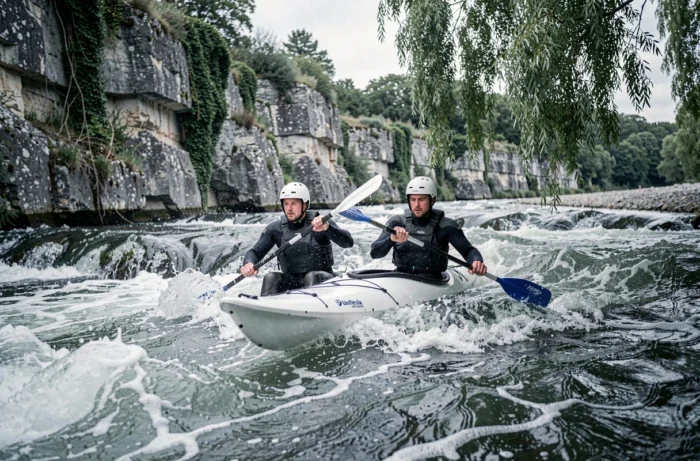
Packrafting and kayaking are among the most sought-after adventure activities in Belgium, particularly on the Ardennes rivers. However, the practice depends on a parameter that tourist guides rarely mention: the flow.
On the Amblève, navigation can be suspended when the flow is too low or too high. Insufficient flow endangers spawning grounds and aquatic wildlife. Excessive flow poses a safety issue for paddlers. This dual constraint reduces the actual navigation window to a few months a year, depending on rainfall conditions.
The Coo waterfall, often cited as a point of interest for kayaking descents, illustrates this dependency. Local providers publish updated navigation bulletins, but checking the flow before each descent remains the responsibility of the practitioner. For packrafting, a lightweight inflatable craft that allows for a combination of hiking and navigation, sensitivity to water levels is even more pronounced: a rocky bottom exposed is enough to render a section impassable.
Which rivers to start packrafting
The Lesse and the Semois offer sections suitable for beginners when conditions permit. The Lesse has a moderate current on its lower part, with well-marked access points. The longer Semois allows for multi-day routes combining navigation and camping in authorized areas.
Field reports vary on the practicability of certain sections at the end of summer, a period when water levels are at their lowest. Contacting local rental companies the day before departure helps avoid disappointments.
Hiking and nature in the Ardennes: beyond marked trails
The Belgian Ardennes remains the main playground for hiking in Belgium. The GR 16, which runs along the Semois, traverses some of the densest forest landscapes in the country. The Durbuy region, often presented as the smallest town in the world, serves as a base for routes that ascend towards the limestone ridges and the steep valleys of the Ourthe.
The Hautes Fagnes are a special case. This area of high-altitude peat bogs is home to fragile ecosystems, and access is regularly restricted depending on fire risk. In 2026, temporary closures were documented in the province of Liège. Detour routes exist but are not always reported in real-time on public hiking apps.
- Check the province’s alerts before any outing in the Hautes Fagnes, especially between June and October.
- Prefer marked trails by the DNF (Department of Nature and Forests) to avoid sensitive areas during dry periods.
- Bring enough water: resupply points are rare on the peat plateaus, and streams may be dry by the end of summer.
Climbing and vertical activities
The rocks of Freÿr, in the Meuse valley, concentrate the majority of the outdoor climbing routes in the country. This limestone site offers routes of varying levels, but access is governed by agreements between climbers and landowners. Some cliffs are subject to seasonal closures for peregrine falcon nesting.
Outdoor climbing in Belgium remains a niche practice, with a limited number of exploitable natural sites. Indoor climbing gyms in Brussels and Liège often serve as a winter complement for regular climbers.
Nature activities in Flanders and on the Belgian coast
Flanders, often reduced to its cities and cycling network, actually has some lesser-known nature reserves. The marshes of Bruges host remarkable biodiversity for a suburban area. The Bosland National Park, in the province of Limburg, offers routes for all-terrain electric scooters, a hybrid format between leisure and nature exploration.
The North Sea coast offers sea outings to offshore wind farms, an unusual experience that combines navigation and industrial discovery. These outings are highly dependent on weather conditions and are canceled without notice in case of excessive swell.
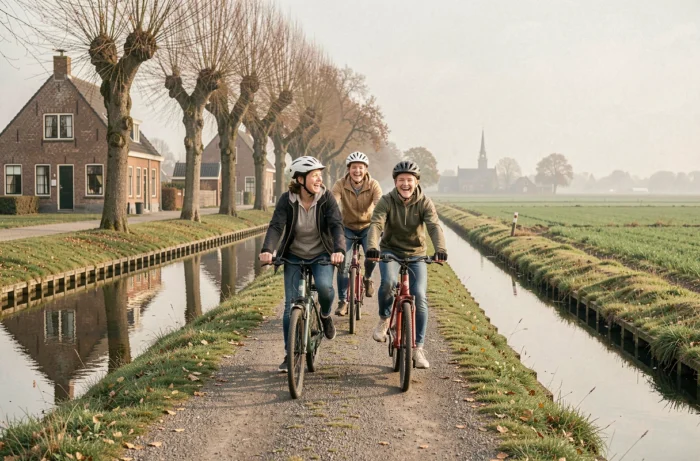
Biking remains the preferred mode of exploration in Flanders. The network of junction points (knooppunten) allows for custom loops through the Campine or along the canals. The cycling route of the Kempen traverses heath and pine forest landscapes that contrast with the flat and agricultural image generally associated with the region.
Belgium offers a dense adventure terrain, provided one navigates its constraints. River flow, seasonal closures, forestry regulations: each nature activity requires prior verification that tourist brochures do not detail. It is precisely this preparation that distinguishes a successful outing from a day wasted on a closed trail or a dry river.