
An old apartment in downtown Pézenas listed at an attractive price, an energy performance rating of F, and a tightening of local regulations on short-term rentals: this is the type of concrete situation awaiting buyers in this market. Investing in real estate in Pézenas remains a profitable operation, provided that recent technical and regulatory constraints are taken into account before signing.
EPC and thermal sieves in Pézenas: the trap that changes profitability
When looking at real estate listings in the historic center, one often comes across stone properties with poor energy labels. The old housing stock in Pézenas contains a significant share of poorly rated properties according to the energy performance diagnosis.
Since January 1, 2026, the conversion coefficient for electricity in the calculation of the EPC has changed from 2.3 to 1.9. In practical terms, some electrically heated homes gain a class without any work. A property rated F can mechanically move to E, which radically changes its rental value and its ability to be rented legally.
The listings available on pezenas-immobilier.fr allow for a comparison of the EPC labels of properties for sale and to identify those benefiting from this automatic revaluation.
On the other hand, an EPC conducted before this date remains valid according to the old coefficients. Therefore, it is essential to check the date of the diagnosis before buying: a property that seems rated G could actually achieve an F or E with a new calculation. Having the EPC redone before negotiation can lower the purchase price or, conversely, reveal a class gain that secures the rental project.

Seasonal rental in Pézenas: new rules and actual yield calculation
Pézenas attracts a steady flow of tourists thanks to its architectural heritage and proximity to the Mediterranean. The temptation for short-term furnished rentals is strong, but the regulations have changed significantly.
The Le Meur law strengthens the powers of municipalities and co-ownerships regarding quotas, change of use, and prohibition of tourist rentals. For some furnished rentals newly subject to change of use authorization, an EPC between A and E is now required. Starting January 1, 2034, these furnished rentals must achieve a class between A and D.
In other words, an old property in the historic center may require significant renovations before it can even be operated as a short-term rental. This includes interior insulation, replacement of joinery, and sometimes a complete overhaul of the heating system.
What this changes in the profitability calculation
The displayed yield of a tourist rental no longer holds if we add:
- The cost of energy compliance renovations, which can represent several tens of thousands of euros for an old poorly insulated property
- The fees related to the application for change of use authorization from the town hall, with a risk of refusal in already saturated areas
- The possibility for the co-ownership to outright prohibit tourist rentals in the regulations, a right strengthened by recent texts
Before betting on seasonal rental in Pézenas, it is recommended to check three points: the co-ownership regulations, the town hall’s position on change of use authorizations, and the current EPC of the property. Feedback on this point varies by neighborhood and property types.
Price per square meter and rental tension: where does Pézenas stand in Hérault
The average price per square meter in Pézenas is around €2,254, with an estimated average yield of 6.62%. These figures place the city in a significantly more accessible range than Montpellier, while offering a higher rental yield.
The population of the municipality, approximately 7,788 inhabitants, is experiencing a slight decline. This parameter necessitates targeting properties that meet real demand: small units in the city center rent better than large houses on the outskirts.
Unemployment rate and tenant solvency
The local unemployment rate, around 13%, is higher than the national average. This indicator cannot be ignored when assessing the solvency of future tenants. The imbalance between supply and demand still plays in favor of landlords: properly positioned properties (good EPC, central location, consistent rent) find tenants quickly.
Denormandie scheme in Pézenas: renovate to reduce taxes in the old
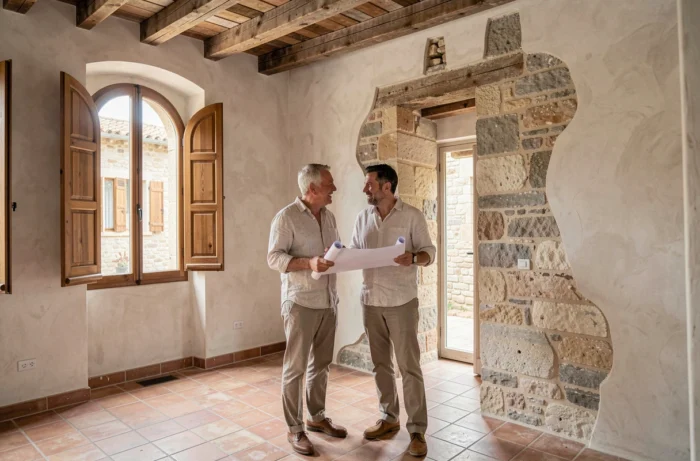
Pézenas is eligible for the Denormandie scheme, which offers a tax lever to investors willing to renovate degraded old properties. This point is underutilized in most analyses of the local market.
The principle is straightforward: you buy a property requiring renovations that represent a significant portion of the total cost of the operation, you renovate, and you benefit from a tax reduction in exchange for a commitment to rent at a capped price.
Combining Denormandie with energy renovation solves two problems in one operation: improving the EPC of the property (to stay within regulatory limits) and reducing the tax bill. On an old building in the historic center, this strategy transforms a property that is difficult to rent into a profitable and compliant asset.
Points of caution before renovations
- Have a complete diagnosis done before purchase (roof, plumbing, EPC) to accurately estimate the renovation budget
- Check that the property is located within the Denormandie eligible perimeter, which is the case for the old center of Pézenas
- Ensure that the planned renovations fall within the eligible categories, particularly improving energy performance
- Anticipate administrative delays related to classified buildings or those located within the perimeter of historical monuments
The real estate market in Pézenas rewards buyers who do their calculations before signing. A renovated property, well-rated in the EPC and located in the city center remains the most solid investment profile in this municipality, whether the goal is long-term rental or mixed use. Recent regulatory constraints eliminate approximate projects, which, for a diligent investor, reduces competition for the best opportunities.