
Traveling cheaper is no longer just about finding a discounted flight. With accommodation taxes rising in several European cities, cabin baggage fees, and new booking rules imposed by the EU, the heaviest expenses have shifted. Here are ten concrete levers to reduce the actual cost of your vacation.
1. Track hidden fees before the ticket price

We often start by comparing the displayed flight fare, while the extra costs play out elsewhere. The European Union adopted a reform of air passenger rights in 2026 that requires displaying a fare including cabin baggage from the beginning of the booking process. Several additional fees, such as correcting a name error or printing a boarding pass after check-in, are now prohibited.
Before confirming a ticket, check the total amount displayed at the end of the booking tunnel. Compare it to the initial price: the difference reveals the actual margins of the airline. Several Yoopi Travel tips detail this type of verification step by step.
2. Book in private browsing mode to avoid dynamic pricing

Comparators and some airlines adjust their prices based on your previous searches. Opening a private (or incognito) browsing window prevents cookies from signaling your repeated interest in a destination.
Comparing the same flight in private mode and normal mode often suffices to notice a price difference. The operation takes a few seconds and requires no paid tools.
3. Shift departure to mid-week

Flights on Tuesdays and Wednesdays regularly show lower fares than those on Fridays or Sundays. Demand is concentrated on weekends, so airlines lower their prices mid-week to fill their planes.
The same principle applies to accommodations: checking in on Thursday instead of Saturday can reduce the price of the night in tourist areas. Returns vary on this point depending on the destination, but the shift remains a reliable lever in Europe.
4. Travel off-season for savings on all fronts

Recent data confirms that tourist seasonality remains highly concentrated in summer in Europe. Shifting your vacation to May, September, or October allows you to pay less for flights, accommodations, and activities on-site.
The advantage goes beyond the budget: less crowding, often pleasant temperatures, and easier access to popular sites. It’s also an opportunity to discover lesser-known destinations than the classic Mediterranean ones.
5. Use accommodation taxes as a destination selection criterion

Several European cities are increasing their tourist taxes. Amsterdam, Barcelona, Venice, and Berlin apply amounts that significantly increase the final bill, sometimes considerably on a week-long stay.
Comparing accommodation taxes before choosing your destination is one of the reflexes to adopt. A neighboring, less touristy city can offer a comparable experience without this extra cost. This is a criterion rarely displayed on standard comparators.
6. Opt for house swapping instead of hotels

House swapping eliminates the accommodation expense from your budget. Several platforms connect homeowners who agree on dates and destinations.
The principle works particularly well for families: you have a kitchen, a living space, and avoid meal costs for breakfast and dinner. However, it requires some preparation time to find a compatible exchange with your dates.
7. Prefer trains for short European distances

On routes of a few hundred kilometers, the train often turns out to be cheaper than flying once all costs are included (airport transfer, baggage, check-in time). European rail networks offer discounted fares for early bookings.
Slow travel is gaining ground in Europe, with a growing interest in slower journeys and destinations accessible by rail. The journey becomes part of the trip, not just a transfer.
8. Cook on-site to reduce dining expenses

Dining out represents an underestimated expense before departure. Renting accommodation with a kitchen (apartment, house, equipped camping) allows you to prepare at least breakfast and some meals.
Buying products at local markets costs less than a tourist restaurant and provides access to regional specialties. Keep one or two restaurants for special moments, rather than eating out by default.
9. Avoid banking fees with a travel-friendly card

Currency exchange and withdrawal fees abroad eat into the budget without you realizing it. Several online banks and neobanks offer cards with no commission on payments and withdrawals outside the eurozone.
Here are the criteria to check before you leave:
- No fees on payments in foreign currency
- Number of free withdrawals per month at ATMs
- Payment and withdrawal limits suitable for the duration of the stay
10. Buy an e-SIM card before departure to avoid overage charges
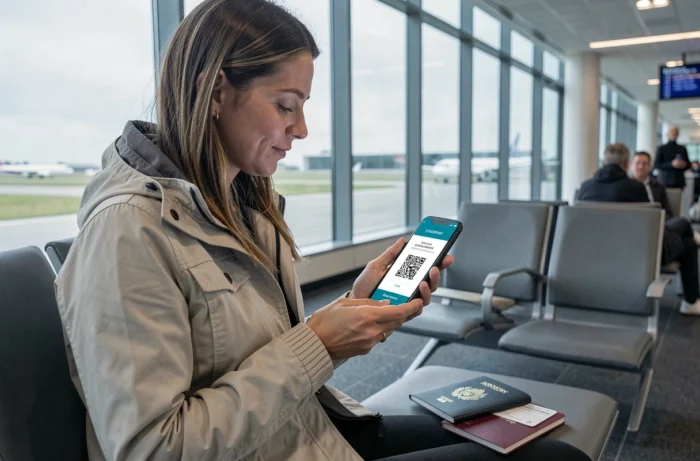
Outside the European Union, mobile data fees skyrocket. An e-SIM card purchased before departure covers internet connectivity without relying on your operator’s roaming.
Activation is done directly from the phone, without changing the physical card. You choose a plan suitable for the duration of the trip, which avoids unpleasant surprises on the bill upon return.
The most sustainable savings do not come from a single spectacular trick, but from the accumulation of decisions made before departure: comparing actual fees, shifting dates, adapting the destination to local taxes. It’s the combination of these reflexes that transforms a tight budget into a successful vacation.