
Choosing a travel destination in 2025 is no longer just about browsing a list of photogenic countries. International arrivals have surpassed pre-pandemic levels, which significantly alters the on-site experience: longer queues, crowded accommodations during peak season, and rising prices in the most publicized locations. Before booking, three criteria deserve to be laid out: the timing, the visitor numbers, and the level of preparation that the destination requires.
Visitor Numbers and Accommodation Capacity: The Criteria That Rankings Ignore
Have you ever noticed that a beautiful place in photos can become exhausting once you arrive, simply because of the crowd? The Travel & Tourism Development Index 2026 from the World Economic Forum, published on September 25, 2026, confirms that international arrivals reached a record high in 2025. This recovery increases the risk of saturation in already popular destinations.
The usual reflex is to compare countries based on their beauty or culture. A more useful approach is to assess the accommodation capacity relative to tourist influx. A small, highly publicized country (Iceland, Cyclades) offers a very different experience in July compared to October. A large, lesser-known country (Cameroon, Uzbekistan) absorbs visitors better, even during peak season.
To refine your selection based on these parameters, you can consult the travel advice from Qui Peut that combines attractiveness and practical data on each country.
Traveling in the Shoulder Season: April-May and September-October
The choice of timing weighs as heavily as the choice of country. An analysis published by Travelium in September 2026, based on the Booking.com Sustainable Travel Report 2025, shows a net shift in traveler interest towards the shoulder seasons. The reasons are cumulative: extreme heat in summer, crowds, and inflated airfare.
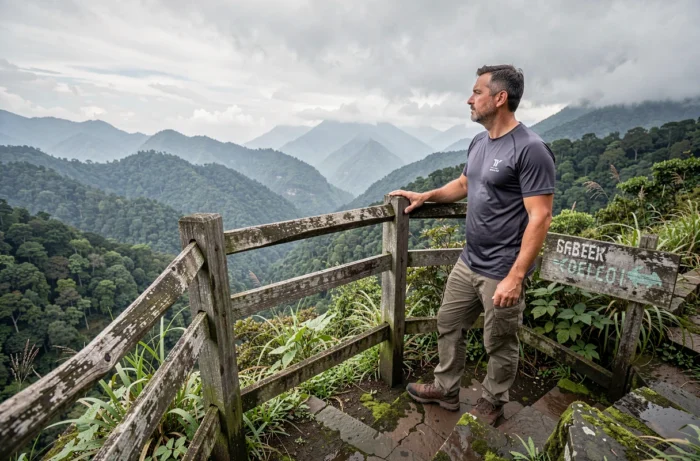
Specifically, traveling in April or October to a Southeast Asian country (Thailand, Indonesia) or a Mediterranean region (Andalusia, mainland Greece) means manageable temperatures, available accommodations, and significantly lower prices than in mid-summer.
This seasonal shift also changes the nature of the stay. In the low season, locals are more available, local markets return to their normal rhythm, and natural sites regain their tranquility. The same country can offer two radically different experiences depending on the month.
Three Guidelines for Choosing Your Travel Window
- Check the rainy season and monsoon: a tropical country in May can be ideal in the north and unmanageable in the south, or vice versa depending on local geography.
- Compare flight prices over several months: the differences between high and low season often exceed the hotel budget difference. A flight in September can sometimes cost half of the same trip in August.
- Research local events: a festival, a religious holiday, or an agricultural harvest can transform an ordinary stay into a memorable experience, provided you know about it before booking.
Accessibility and Digital Preparation: Still Significant Gaps
The World Economic Forum emphasizes that artificial intelligence increases the importance of digital skills and the quality of local data. Translation: not all destinations prepare in the same way. Some countries have reliable transport apps, detailed maps, and well-established online booking systems. Others still require manual scouting, local contacts, or even on-site assistance.
This criterion almost never appears in destination rankings. However, it changes the game for an independent traveler. Booking a train in Japan from France can be done in a few clicks. Organizing an itinerary in the Namibian desert or planning a circuit in Uzbekistan requires more research and flexibility.
Two Travel Profiles, Two Levels of Preparation
The first profile concerns countries with strong tourist infrastructure. Italy, Japan, Thailand, or Greece offer dense transport networks, a varied accommodation offer, and abundant online resources. Travel can be easily organized in complete autonomy.
The second profile includes emerging or less marked destinations: Cameroon, Albania, Colombia, inland Slovenia. These countries are gaining attractiveness, but the quality of information available in French remains uneven. Planning for a local guide, checking visa conditions, and anticipating internal travel is part of the journey.

Traveler Responsibility: What 2025 Changes Concretely
The notion of responsible tourism has long been a matter of discourse. In 2025, it translates into concrete measures in several countries. Local ethical codes are multiplying, regulating visitor behavior in sensitive areas (natural parks, heritage sites, rural communities).
The Booking.com Sustainable Travel Report 2025 describes a growing interest among travelers for stays with reduced impact. This does not mean giving up comfort or discovery, but rather favoring local accommodations, train journeys when possible, and circuits that benefit local economies.
- Favor locally managed accommodations over large international chains, especially in countries where tourism represents a significant part of the economy.
- Choose train or bus for internal travel in well-served countries (Japan, Italy, Spain), which reduces carbon footprint and often offers better immersion.
- Learn about local codes of conduct before departure: some regions impose specific rules on photography, access to sacred sites, or waste management in natural settings.
Choosing your next trip in 2025 comes down to balancing attractiveness, accessibility, and visitor numbers. The most rewarding destinations are not necessarily the most publicized, but those that match your level of preparation, the right season, and what you truly expect from a stay.