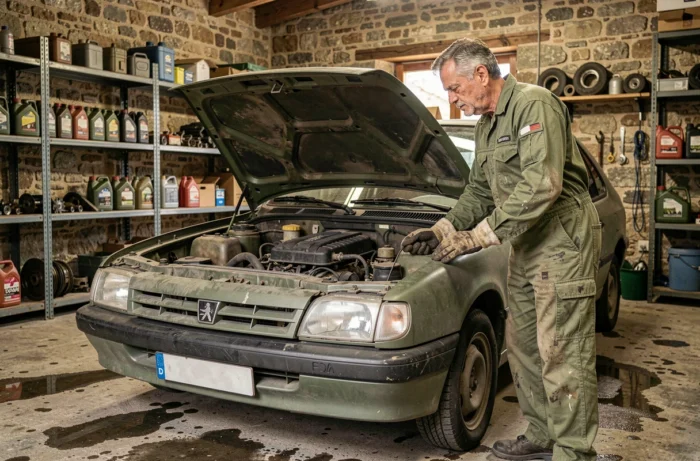
The decommissioned Peugeot P4 attracts a community of enthusiasts who see in this military vehicle a robust and endearing 4×4. However, transitioning from military to civilian use is not just about changing the plates. The diesel engine, the chassis, the running gear: everything was designed for military specifications, with its advantages and limitations. Properly maintaining a decommissioned P4 requires understanding these specifics before reaching for the toolbox.
Single Vehicle Approval (RTI): the regulatory trap that shortens the life of a P4
Before even discussing mechanics, one point deserves your full attention. In France, any significant modification of a vehicle (engine change, chassis modifications, bodywork) now systematically requires a single vehicle approval issued by the DREAL. Military P4s converted for civilian use are directly affected.
Why is this point crucial for the longevity of your P4? Because a structural modification made without RTI increases the likelihood of rejection during the technical inspection. In the worst case, this leads to immobilization or non-renewal of the registration certificate. A mechanically sound vehicle but administratively blocked cannot be driven.
Specifically, if you plan to change the axles, suspension, or install a non-original engine, plan for the RTI from the start. Backtracking on unapproved modifications is costly and time-consuming. Seeking to maximize the lifespan of your Peugeot P4 starts with this regulatory compliance.
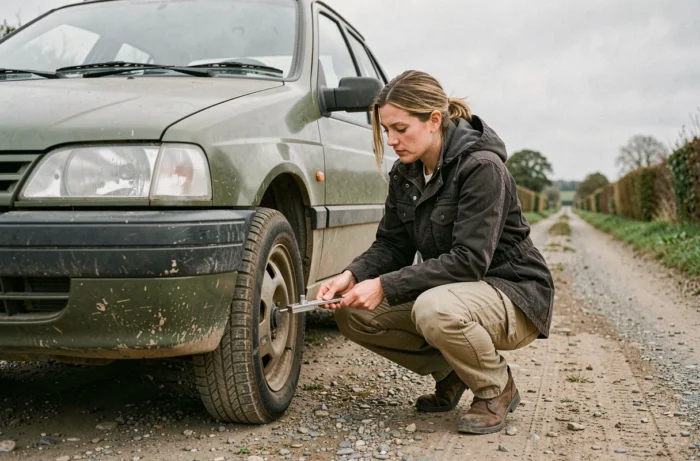
P4 Diesel Engine: Specific Maintenance and Parts to Monitor
The diesel versions of the P4, which replaced the earlier petrol models deemed too powerful for the chassis, run with robust but old mechanics. Their reliability depends on rigorous maintenance suited to their design.
Cooling System and Overheating
The cooling system of a diesel P4 was designed for intensive low-speed use (convoys, rough terrain). In civilian use, especially on the road, the engine may heat differently. Check the thermostat, radiator, and hoses with each change of season. Even brief overheating can irreversibly damage the cylinder head.
Filtration and Lubrication
On a decommissioned military vehicle, the circuits have often been neglected during the storage period. Before driving regularly, systematically replace these components:
- The oil filter and engine oil, even if the oil change seems recent, as prolonged storage degrades lubricating properties
- The fuel filter, often clogged with residues from military diesel or condensation in the tank
- The air filter, whose specific housing for the P4 poorly retains fine particles after years without maintenance
Replacing these three filters upon acquisition avoids most early breakdowns on a freshly decommissioned P4.
Chassis and Running Gear: What the Army Didn’t Repair
The French army maintained its P4s according to a strict schedule, but with a utilitarian logic. Parts were replaced when they broke down, rarely preventively. The chassis, in particular, deserves thorough inspection.
Have you ever noticed rust on the frame rails of a P4 for sale? It’s common. These vehicles have often been exposed to mud, salt, and moisture for years. The chassis of a P4 must be sandblasted and treated for corrosion before any regular use.
The suspension bushings and steering joints are the parts that suffer the most from storage. The rubber dries out, hardens, and then cracks. Driving with worn bushings accelerates the wear of other components of the running gear, creating a costly domino effect.
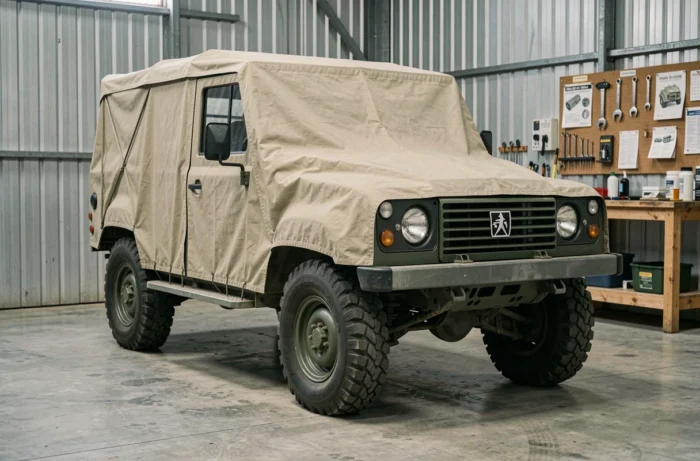
Supply of Spare Parts for Peugeot P4
The P4 shares its technical base with the Mercedes G-Class (W460), which opens two distinct supply channels. Mechanical parts (engine, gearbox, axles) can be found on the Mercedes side. Body and equipment elements specific to the French version are rarer.
Here are a few pointers to save time:
- Diesel engine parts can be ordered using Mercedes references, often available from specialists in the old G-Class
- Specific P4 body parts (fenders, hood, windshield) mainly circulate on the second-hand market among enthusiasts and on dedicated forums
- Brake and steering parts are compatible with Mercedes W460 references, making regular maintenance easier
Identifying the corresponding Mercedes references upon purchase saves weeks of research for each repair. Keep a cross-reference table between P4 part numbers and their Mercedes equivalents.
Storage and Protection Between Uses
Many owners of decommissioned P4s do not drive them daily. The vehicle is used a few weekends a month, sometimes less. This intermittent use creates specific problems.
The battery discharges within a few weeks if nothing is planned. An accessible kill switch from the cabin solves this issue simply. For the fuel system, a half-full tank limits condensation that corrodes the tank from the inside and clogs the injectors.
Park the P4 on a dry surface if possible. Prolonged contact between a damp ground and the underside of the vehicle accelerates corrosion, even on a treated chassis. A breathable cover protects the bodywork without trapping moisture, unlike a waterproof plastic cover that promotes condensation.
The lifespan of a decommissioned Peugeot P4 depends less on its original robustness than on the diligence of its civilian owner. Administrative compliance, maintenance suited to old diesel, anti-corrosion treatment of the chassis, and smart sourcing of parts: these four areas make the difference between a P4 that still runs in ten years and a wreck immobilized in a field.