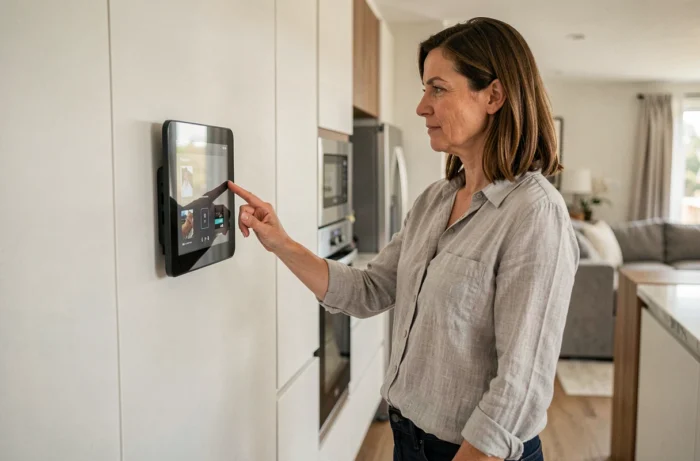
You adjust the thermostat when leaving, close the shutters from the couch, and check the front door on your phone. These gestures, now commonplace for many households, rely on a set of technologies grouped under the term home automation. Behind this apparent ease lie technical choices, recent regulatory constraints, and a few pitfalls that traditional guides rarely mention.
Communication Protocols: The Real Criterion Before Any Home Automation Purchase
Before choosing a connected thermostat or a camera, the first question to ask concerns the communication protocol. It determines whether your devices can communicate with each other or remain isolated.
You may have heard of Matter, a standard launched to unify ecosystems. The idea is appealing: a single common language for all brands. In practice, the deployment of Matter remains uneven among manufacturers and product categories. Some connected bulbs support it, but your lock or smoke detector may not.
Other protocols like Zigbee, Z-Wave, or traditional Wi-Fi continue to coexist. Each has its strengths: Zigbee consumes little energy, Z-Wave penetrates thick walls better, and Wi-Fi avoids the need to purchase an additional gateway. The choice depends on the size of the home, the number of devices, and your budget. To explore the various solutions available on the French market, platforms like domotica.fr allow you to compare equipment compatible with each protocol.
A common pitfall: buying connected devices from different brands without checking their compatibility. You then end up with three separate apps on your phone, no possible automation between the systems, and a feeling of unnecessary complexity.
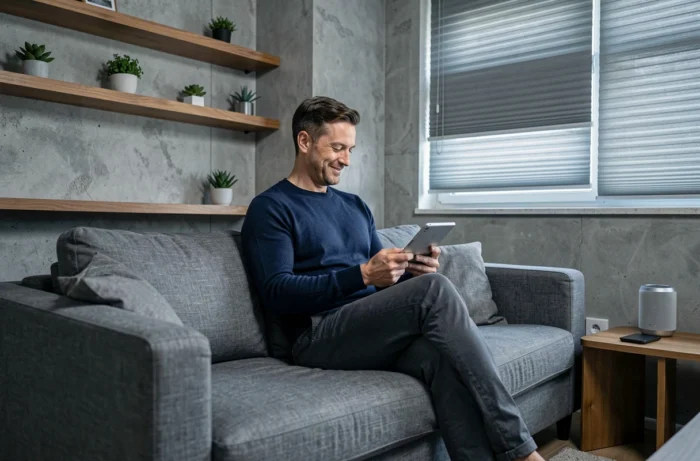
Heating and Lighting Management: Where Home Automation Really Makes a Difference
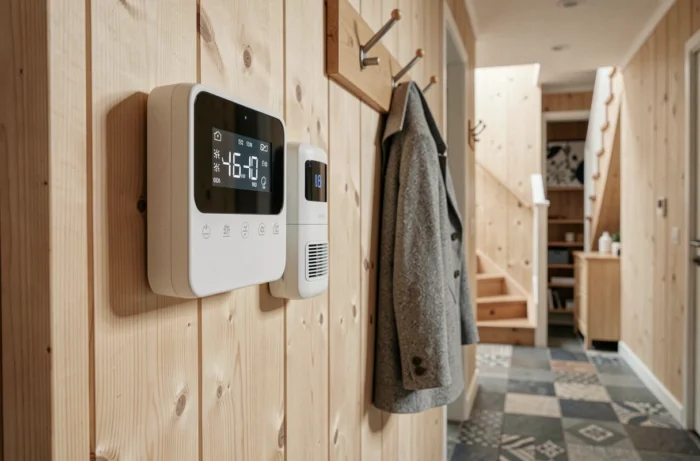
Energy management is the area where home automation equipment produces the most tangible results. A connected thermostat does not just display the temperature: it learns your habits, detects your absence, and adjusts the heating room by room.
A programmable thermostat reduces waste without daily effort. You set a comfort temperature for times when you are home, a reduced temperature at night or during the day when the house is empty. The system takes care of it on its own.
Lighting follows the same logic. Light and presence sensors automatically turn off unoccupied rooms. You can also create scenarios: a dimmed ambiance in the evening, bright lighting in the morning, a general shutdown at bedtime.
How These Automations Change Daily Life
The difference with a simple timer or mechanical programmer lies in adaptability. If you return earlier than expected, the system detects your presence (via your phone or a sensor) and restarts the heating. If a window is open, a sensor turns off the radiator in the affected room to avoid heating the outside.
These micro-adjustments, repeated every day, generate measurable energy savings over a heating season. Comfort increases in parallel, as the temperature remains stable without manual intervention.
Connected Security and Personal Data: Two Sides of the Same Coin
Cameras, intrusion detectors, connected locks, presence simulators: home automation security systems provide reassurance. You receive an alert on your phone as soon as movement is detected. You can check remotely that everything is fine.
The downside is the volume of data these devices produce. An indoor camera records continuously. A door sensor logs every opening and closing. This data describes your daily life with a precision that many underestimate.
The European Regulatory Framework is Strengthening
Two recent European texts change the game for home automation users:
- The Cyber Resilience Act, which comes into force on December 10, 2024, requires manufacturers to fix vulnerabilities in their connected products. From September 11, 2026, actively exploited vulnerabilities must be reported quickly to European authorities. Full application is expected by December 11, 2027.
- The Data Act, applicable since September 12, 2025, gives users the right to access the data generated by their connected objects, including non-personal data under GDPR. For products launched after September 12, 2026, this accessibility must be integrated from the design stage.
- The GDPR continues to apply in parallel for everything concerning personal data: surveillance images, geolocation histories, voice recordings from assistants.
In practical terms, this means you have the right to retrieve the data produced by your thermostat or camera, even if the manufacturer would prefer to keep it on their servers. A criterion to check before purchase.
Home Automation and Autonomy at Home: An Underestimated Use
We often talk about comfort and savings. We talk less about the help that home automation provides to elderly or mobility-impaired individuals who wish to remain in their homes.
Controlling the shutters, lighting, and heating by voice or from a tablet eliminates physical actions that can sometimes be painful. A fall detector can alert a relative or an assistance service. Home automation concretely extends autonomy at home.
However, installation requires consideration of the interface. A complex app with twenty menus helps no one if the user is not proficient with smartphones. The most suitable systems offer simple voice commands or physical remote controls with large buttons, without going through a touchscreen.
Criteria for an Appropriate Installation
- Favor a centralized system with a single interface rather than multiple separate applications
- Check that voice control works offline for cases of network failure
- Provide a backup power supply (battery) for security and alert equipment
- Test the system with the concerned person before finalizing the configuration
Home automation is not just about turning on a lamp from your couch. It involves choices of protocol, data management, and compatibility that determine the long-term experience. Recent European regulations strengthen user rights, but the responsibility to check compatibility and security of equipment remains with the buyer. It’s better to have three well-chosen and interoperable devices than a dozen gadgets that ignore each other.