
You have just had a scan or an MRI, and the radiologist gives you a CD-ROM. A few months later, another doctor asks you for these images. The disk is missing, scratched, or simply unreadable on your computer. This scenario affects a large number of patients who undergo medical imaging exams. Specialized web services today allow you to store, view, and share these medical images from any connected device.
The DICOM format, the technical foundation of your medical images
Before discussing online management, it is essential to understand what makes medical images different from a simple photo. A scan or MRI image is not a JPEG file. It is encoded in DICOM format (Digital Imaging and Communications in Medicine).
This format contains much more than just an image. It includes patient information, the date of the exam, the type of modality (scan, ultrasound, X-ray), and the technical acquisition parameters. A DICOM file is therefore significantly larger than a standard photo and requires compatible software to be viewed correctly.
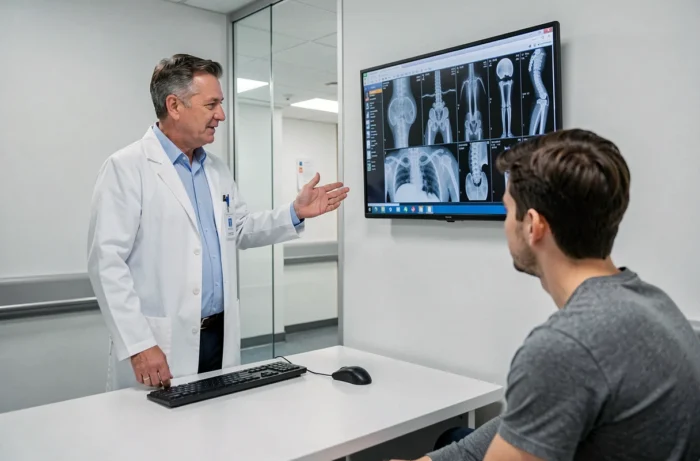
This is precisely why web imaging services exist. They integrate DICOM viewers directly into the browser, with no installation required. You can access your slices, zoom in, adjust the contrast, measure an area, all from an interface designed for diagnosis. To better understand the journey of your exams online, the web service irld.net in imaging details each step, from acquisition to consultation by the practitioner.
HDS Certification: what the law requires from medical image hosts
Entrusting your X-rays or MRIs to an online service raises a legitimate question: where is this data stored, and who has access to it?
In France, any provider that hosts health data on behalf of third parties must hold Health Data Hosting Certification (HDS). An order dated April 26, 2024, has profoundly revised this framework. Since spring 2026, only version 2.0 of the framework is valid. Providers still certified under the old version 1.1 from 2018 can no longer legally carry out this activity.
The new certification imposes two major constraints:
- Health data (DICOM images, clinical photos integrated into the file) must be physically stored in the European Economic Area.
- The host must clearly inform its clients about the hosting conditions and any potential transfer outside the EU/EEA.
For a patient, this means that the choice of web service is not trivial. Checking that the platform displays its HDS 2.0 certification is the first reflex to have before uploading any exam.
Cloud PACS or patient platform: two different logics
Not all web imaging services cater to the same users. There are two main families, and confusing them can lead to poor choices.
Cloud PACS for healthcare professionals
A PACS (Picture Archiving and Communication System) is the system used by radiologists and hospitals to archive and transmit images. Historically installed on local servers within the facility, the PACS is gradually migrating to the cloud. This migration eliminates the constraints of physical storage capacity and reduces hardware maintenance costs.
A cloud PACS also allows sharing between facilities. A hospital radiologist can consult an exam performed in a private practice, provided that both structures use interoperable systems.
Patient-oriented platforms
Other web services are aimed directly at patients. Their logic is different: they offer a personal space to store exams, organize them by date or type, and share them with a doctor via a secure link.
These platforms generally include a simplified DICOM viewer. You do not have the advanced analysis tools of a radiologist, but you can view your images, check that an exam has been properly transmitted, or send temporary access to a specialist before a consultation.

European Health Data Space: what changes for image sharing
The regulatory framework is not limited to France. The European Regulation on the European Health Data Space (EHDS), which came into effect on March 26, 2025, redefines the rules for the circulation of medical data between member countries.
One of its aspects directly concerns imaging. It stipulates that each patient can access their health data in digital form, including images, in any member state. For specialized web services, this means adhering to common interoperability standards, particularly regarding the DICOM format and IHE (Integrating the Healthcare Enterprise) profiles.
The deadline for full compliance is set for 2029 for diagnostic imaging. Platforms that anticipate these requirements offer a concrete advantage now: the portability of your exams across borders, without loss of information.
Concrete criteria for choosing a medical imaging web service
You have decided to centralize your exams online. How do you distinguish a reliable solution from a fragile platform? Here are the verification points that really matter:
- Valid HDS 2.0 certification: check on the ANS (National Health Digital Agency) website that the provider is listed in the official list.
- Native DICOM compatibility: the platform must read DICOM files without prior conversion, or risk losing clinical metadata.
- End-to-end encryption: images must be encrypted during transfer and at rest on the servers.
- Access rights management: you must be able to grant temporary access to a doctor and then revoke it.
- Server location in the EEA: this is a legal obligation, not an option.
A service that ticks these five boxes offers a solid foundation. Everything else (interface, mobile app, integration with a DMP) relates to user comfort.
Managing your medical images is no longer just about keeping a CD in a drawer. The technical and regulatory framework pushes towards secure, interoperable, and accessible digital solutions throughout Europe. Choosing the right service now ensures that your exams remain usable in ten years, regardless of which doctor may need them.