What criteria truly distinguish a memorable wedding decoration from a generic decor replicated identically from one Pinterest board to another? Recent trends show a measurable shift: couples are abandoning standardized themes (rustic, bohemian, vintage) in favor of setups built around their own story, freely mixing visual codes. This article compares the dominant approaches in wedding decoration and identifies the concrete gaps between established trends and emerging directions.
Metals, colors, and materials: what is changing in wedding decoration
The choice of metallic finishes and color palettes is the first indicator of an evolving decor trend. The table below summarizes the directions observed in recent seasons compared to the emerging signals for the future.
| Criterion | Established Trend | Emerging Direction |
|---|---|---|
| Dominant Metal | Gold (brass, brushed gold) | Brushed silver, chrome, mirror |
| Typical Palette | Warm tones (terracotta, blush, sage) | Personal palettes linked to the couple’s story |
| Table Materials | Natural linen, jute, raw wood | Hybrid mixes (urban + nature, minimalism + romanticism) |
| Floral Approach | Pampas grass, eucalyptus, gypsophila | Wheat spikes, local grasses, low-impact compositions |
| Decorative Logic | Universal Pinterest theme | Consistent scenography without a fixed theme |
The clearest point remains the shift from gold to silver. After several seasons dominated by warm metals, silver is dethroning gold in contemporary decor. This shift paves the way for cooler and more minimalist atmospheres, suited to urban or industrial reception venues.
The inspirations compiled on the decoration page of Cœur de Mariage illustrate this coexistence between classic palettes and more current proposals, where each decorative element is chosen based on a personal thread rather than a pre-established theme.
Personalized table decoration: the end of standardized themes
The most significant difference between a “2024 trend” wedding and a wedding designed today lies in the gradual disappearance of the unique theme. Agencies and specialized media note that couples are creating a scenography linked to their own story: shared travels, significant places, cultural references, common passions.
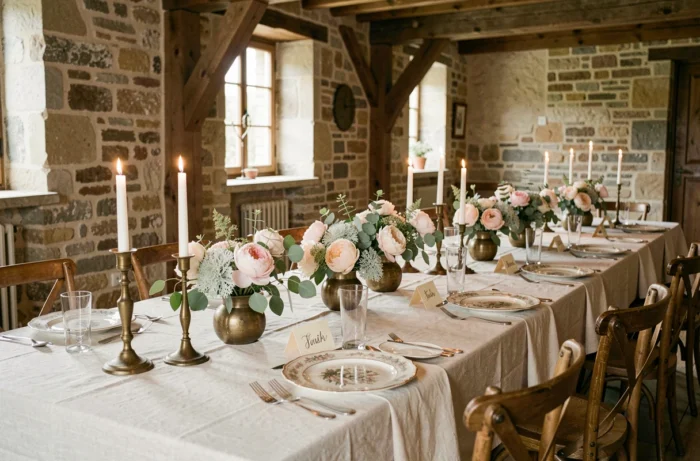
Concretely, this translates into reception tables where visual codes mix without contradiction. A centerpiece can combine minimalist elements (smoked glass candlestick, solid color napkin) with a romantic detail inspired by Regency style, without the whole being identifiable by a single keyword “theme.”
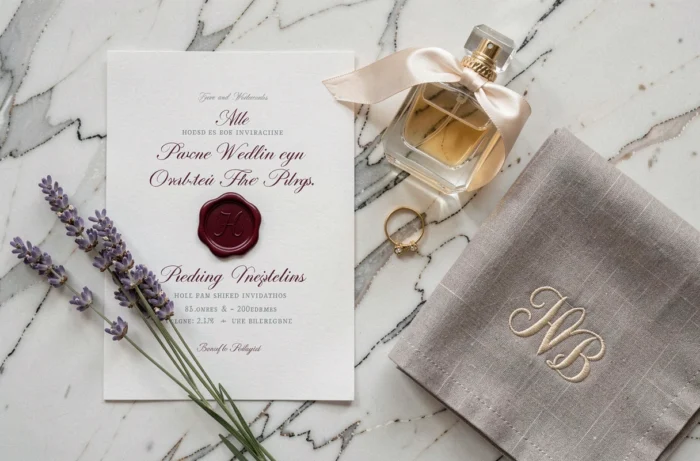
This approach also modifies stationery and signage. Place cards, table numbers, and seating plans no longer follow a rustic or vintage template. They reflect personal codes unique to the couple, sometimes even featuring illustrations drawn from photos of their daily life.
Concrete elements for a table without a fixed theme
- Choose a palette of two to three colors drawn from a shared memory (the shade of a wall during a trip, the color of a cherished object) rather than a Pinterest color wheel
- Vary the heights of centerpieces by alternating low compositions and candlesticks to break visual symmetry
- Integrate a mismatched dish element per table (a colored glass, a thrifted plate) to create a deliberate contrast that signifies personal intention
- Replace printed place card labels with unexpected supports: engraved pebbles, small photo frames, miniature objects related to a couple’s anecdote
Flowers and compositions: local grasses versus imported pampas
The floral choice remains the most visible decorative element of a wedding. Pampas grass and eucalyptus have dominated compositions in recent years. However, current directions point towards low-impact floral compositions, favoring local grasses and seasonal flowers.
The emergence of wheat spikes in wedding compositions is a concrete example. Used alone or mixed with regional dried flowers, they provide a different graphic texture than pampas while reducing supply distance.
Criteria for arbitrating between classic and local compositions
The question is not to ban pampas but to understand what each choice produces visually and logistically.
- Local grasses (wheat, oats, brome) generally cost less than imported pampas grasses and dry naturally without chemical treatment
- Seasonal flowers (dahlias in summer, anemones in spring) offer superior vase life compared to out-of-season varieties transported under cold
- A florist who works in a short supply chain can offer a plot visit to choose the varieties on the plant, enhancing the personal dimension of the decoration
Wedding decoration budget: where to focus the investment
The distribution of the decor budget is rarely approached from the perspective of visual return per item. Some elements produce a disproportionate impact relative to their cost, while others absorb significant sums for a result that guests do not consciously notice.
Light produces the greatest visual impact per euro invested. Well-thought-out lighting (filament garlands, numerous candles, spotlights directed at floral compositions) transforms any reception venue more than an equivalent investment in flowers or furniture.
Conversely, table linens (tablecloths, runners, napkins) often go unnoticed once the dishes and centerpieces are set up. Opting for simple and inexpensive linens allows reallocating the budget towards lighting or an original signage element that will mark guests’ memories.
Couples who build their decoration without a fixed theme also gain budget flexibility: instead of buying a complete decorative kit in a single range, they assemble elements from different origins, thrifted, handmade, or rented, depending on what each item truly contributes to the ambiance of the ceremony and reception venue.
The shift from gold to silver, the end of universal themes, the use of local grasses, and the prioritization of lighting outline a common direction: wedding decoration that is built through subtraction rather than accumulation. Fewer borrowed codes, more deliberate choices. The decor that remains in memory is the one where each element was intentional, not the one where everything was planned.