
The Porsche 911, regardless of its generation, has characteristics that complicate its insurance: high fiscal power, resale value sometimes exceeding the new purchase price for certain vintages, and the cost of spare parts that is incomparable to a standard sedan. Choosing car insurance for this type of vehicle is not just about comparing three online quotes. The contract must cover specific risks, from electronic theft to reverse depreciation, which standard formulas ignore.
Theft without break-in on Porsche 911: a risk that the contract must address
Most owners first think of theft coverage. The problem is that the nature of theft has changed. In 2025, 80% of car thefts in France occur without physical break-in, using electronic methods such as relay attacks (amplifying the key signal).
For a recent 911 equipped with keyless start, the question to ask the insurer is specific: does the theft coverage explicitly include thefts by electronic hacking, or does it require signs of break-in for compensation? Some contracts still exclude “trace-less” thefts, which effectively excludes the majority of actual claims in this segment.
It is useful to ask what car insurance for a Porsche 911 covers this type of claim before signing. Beyond theft coverage, check if the contract requires the installation of a GPS tracker or an anti-relay device as a condition of coverage, as these requirements vary from one insurer to another.
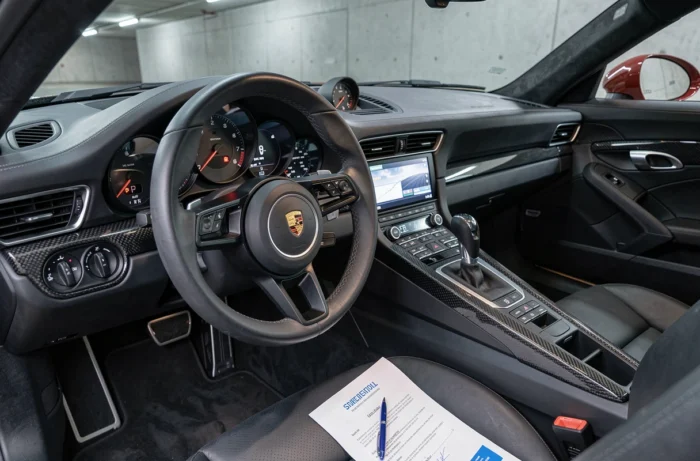
Insured value of a Porsche 911: agreed value or classic Argus
This is the point that fundamentally distinguishes the insurance of a 911 from that of a regular car. An older generation Porsche 911 (type 964, 993, or even certain 996) can see its value increase over time. If the contract compensates based on the Argus value at the time of the claim, an owner may lose several tens of thousands of euros compared to the actual market value.
The agreed value, contractually set between the insured and the insurer, is the only reliable protection against this discrepancy. It is typically reassessed every two to three years, upon presentation of an appraisal. So-called “prestige” or “collection” contracts offer this option, but it is not automatic: it must be negotiated at the time of subscription.
Collection or prestige: two statuses, two pricing logics
A 911 over thirty years old can qualify for a collection registration, which opens access to specific contracts with significantly reduced premiums. However, these contracts often impose a limited annual mileage and prohibit daily use.
For a recent 911 used regularly, a “prestige” contract with a generalist or specialized insurer remains the classic route. The choice between collection and prestige primarily depends on the actual use of the vehicle, not just its age.
Deductible and repair: the pitfalls related to the cost of Porsche parts
The amount of the deductible takes on a particular dimension with a 911. A front bumper, a headlight, or an aluminum hood represents repair costs significantly higher than the automotive market average. A deductible of 500 or 600 euros, acceptable for a city car, may seem trivial compared to a Porsche bodywork bill, but it is primarily the ratio between the deductible and the actual repair cost that needs to be examined.
- Check if the contract allows repairs at an authorized Porsche center or imposes a network of partner body shops of the insurer, which can affect the quality of the parts used.
- Ask if the glass breakage coverage includes the windshield without a specific deductible, as Porsche glass (especially those with heads-up display) costs significantly more than average.
- For recent models, the recalibration of ADAS sensors after windshield replacement represents an additional cost that some contracts do not cover.
A minor claim on a 911 can easily exceed the threshold of economic repairability set by the insurer if the deductible is poorly calibrated. This means that your vehicle could be declared a total loss for a collision you consider minor.
Digital verification of insurance and FVA file
As of April 1, 2024, the green card and insurance sticker have been eliminated for vehicles registered in France. Verification is now done via the Insured Vehicles File (FVA), consulted by law enforcement by scanning the license plate.
For a Porsche 911 owner, this dematerialization requires particular vigilance. If the registration document has any inconsistencies with the insurance contract (error in license plate number, unreported change of owner, unreported technical modification), the vehicle may appear as uninsured during a check. For a vehicle whose value justifies comprehensive coverage, any discrepancy between the registration document and the contract can lead to a refusal of compensation.

Track and occasional use: exclusions to read carefully
Driving on a track with a 911 remains a common practice among owners. Almost all standard contracts exclude damages occurring on a track, even during a simple non-timed track day. Specific extensions exist with some specialized insurers, but they notably increase the premium and come with their own limitations (number of covered days, type of event).
Field reports vary on this point: some owners report that their insurer covered a claim that occurred during an event organized by a club, while others faced the track exclusion for a similar event. The exact wording of the exclusion clause in the general conditions makes all the difference.
Protecting an investment like a Porsche 911 is less about choosing a formula (third party, intermediate, comprehensive) than about reading the technical clauses of the contract. The nature of the theft covered, the vehicle valuation method, the imposed repair network, and the administrative consistency with the FVA are the four points that separate truly protective coverage from a contract that does not pay when it should.